Home › Concrete Foundations and Footings
Start your project on solid ground with properly engineered concrete foundations in Spring Hill, FL. We pour concrete footings, house foundations, foundation slabs, and concrete stem walls that meet code and support your structure. Our team coordinates with your plans and inspections to keep your build on schedule. Contact us for footing layout, pricing, and scheduling.
Superior Concrete Spring Hill provides professional concrete foundations throughout Spring Hill, FL, Florida and the surrounding area. Our licensed, insured crew delivers safe, clean, on-time work with a free estimate before anything begins. Call (352) 715-2150 or request your free quote.
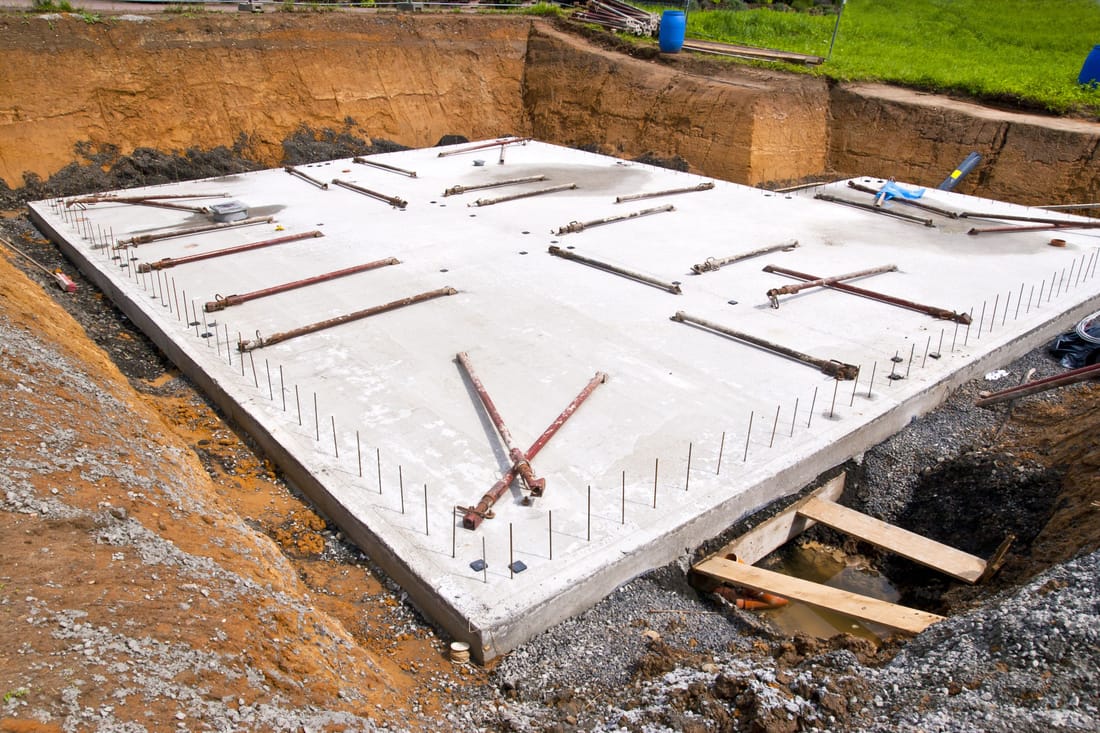
Concrete foundations built for Spring Hill soil and water conditions
Concrete foundations in Spring Hill, FL are only as good as the ground they sit on. At Superior Concrete Spring Hill, we start every foundation and footing job with a site-specific look at your soil, drainage, and elevation, not just a quick sketch. Much of Spring Hill has sandy soils with pockets of clay and a relatively high water table, which affects how deep and wide your footings need to be to stay stable over time.
We coordinate with your building plans and Hernando County requirements to select the right footing depth, width, and reinforcement. For most homes and small commercial buildings in Spring Hill, this means continuous strip footings under load-bearing walls and thickened edge slabs around the perimeter. On sloped or filled lots, we may recommend step footings to follow grade, or isolated pad footings under columns and porch posts.
Our focus is simple: a foundation that does not settle, crack, or move when the summer rains hit or when the ground dries out. That is why Superior Concrete Spring Hill designs foundations around local conditions, not a generic one-size-fits-all chart pulled from another state.
How we install concrete foundations and footings, step by step
A solid foundation is the result of a controlled process, not luck. Here is how Superior Concrete Spring Hill typically handles concrete foundations and footings for homes, additions, garages, and small commercial buildings.
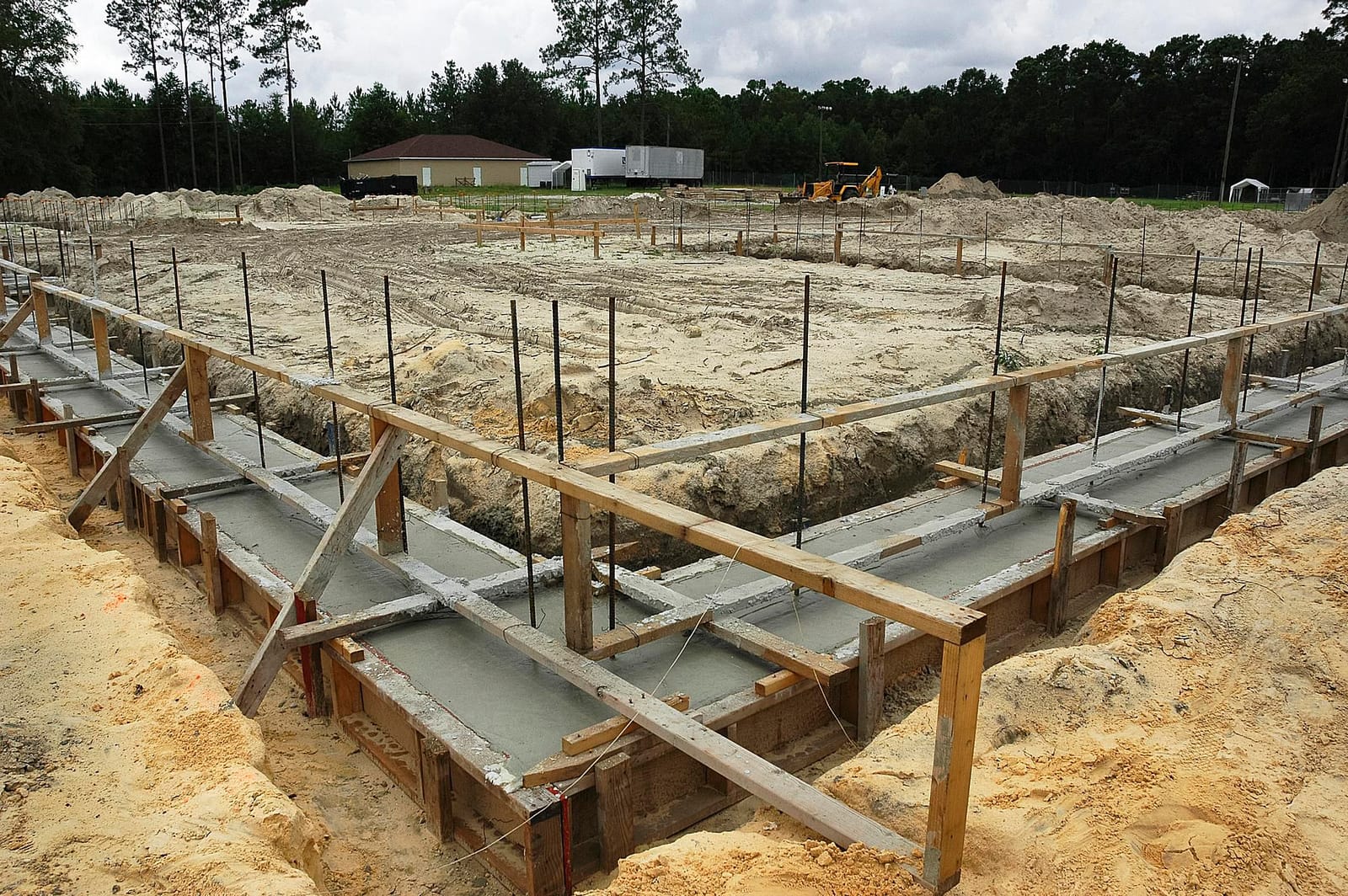
First, we perform layout and excavation. Using your engineer or architect’s drawings, we mark the exact footing lines with stakes and string. Then we excavate to the specified depth, removing loose fill and any organic material. In many Spring Hill yards we find old tree roots or construction debris that must be taken out or compacted properly to avoid future settlement.
Next is subgrade preparation. We compact the exposed soil with plate tampers or rollers to achieve uniform density. Where the soil is too loose or moist, we may bring in clean compacted fill or add a base layer of crushed stone to stabilize the footing area and improve drainage.
Then we build footing forms and install reinforcement. Forms are set to the correct width and height, and checked with a level so the finished concrete is uniform. We install steel rebar cages or grids according to the engineer’s schedule, tying bars together so they stay in place during the pour. In Spring Hill, we often use extra rebar at corners and under point loads to control cracking.
After that we place anchor bolts, sleeves, or hold-downs where required for walls and columns. Finally we pour the concrete, vibrate and rod it to remove air pockets, and strike off the top for a level finish. For slab-on-grade foundations, this is followed by interior formwork, vapor barriers if specified, wire mesh or rebar reinforcement, and the slab pour itself. Proper curing, which can include light misting and protection from direct sun and wind, is critical in our hot Florida climate to prevent surface cracking and curl.
Material and design options for your Spring Hill foundation
Concrete foundations are not all the same mix in a different hole. At Superior Concrete Spring Hill, we select materials and designs that match your project’s load, soil, and budget, as well as local code requirements.
For most residential foundations in Spring Hill, we use ready-mix concrete in the 3,000 to 4,000 psi range, with additives as needed. In high moisture areas, or where we expect exposure to irrigation and standing water, we may specify mixes with improved sulfate resistance or water reducers to improve workability without adding water that weakens the slab.
Reinforcement options include standard deformed rebar (often #4 or #5 bars for footings) and wire mesh in slabs. On heavier structures such as multi-car garages, block homes, or small commercial buildings, we often upgrade to thicker rebar, closer spacing, and continuous bars through corners to handle higher loads.
We also talk with customers about slab features that matter in Florida. This can include thickened edges at garage door openings to handle vehicle traffic, turned-down slab edges to reduce pest intrusion, and monolithic slabs where footings and slab are poured together for speed and cost savings. In some parts of Spring Hill that are more prone to water pooling, we may suggest adding a vapor barrier under interior slabs or incorporating French drains and swales to move runoff away from the foundation.
Every foundation design we propose is tied back to your plans, the expected use of the building, and what we see on your property during our site visit, not just a generic standard detail.
What really drives the cost of concrete foundations in Spring Hill
Many customers ask why two concrete foundations that look similar on paper can differ in price. The cost is not just about square footage. Superior Concrete Spring Hill explains pricing up front so there are fewer surprises once we start digging.
Key drivers include excavation depth and access. A simple foundation on a flat, open lot with shallow footings will cost less than a foundation on a tight yard with fences, trees, and utilities to work around. If we need to over-excavate soft areas, truck in fill, or step the footings to handle a slope, that will affect labor and material costs.
Soil conditions matter. Loose or saturated soils, which are common after heavy rains in parts of Spring Hill, may require compaction, base rock, or wider footings. Higher reinforcement requirements specified by engineers for certain structures, such as block homes or heavy tile-roofed houses, also add rebar and time.
Concrete thickness, strength, and features make a difference as well. A basic monolithic slab for a small shed is not priced the same as a thickened-edge, rebar-reinforced slab for a three-car garage with heavy vehicles. Added items like turned-down edges, vapor barriers, additional control joints, and integrated porches or patios each have a cost component.
We give written proposals that outline these factors so you can see where your money is going. If you have a target budget, we can often present options, such as choosing a monolithic slab instead of separate footings and slab, while still meeting code and structural requirements.
Common foundation problems in Spring Hill and how we address them
Our crew at Superior Concrete Spring Hill has seen what happens when foundations are rushed or installed without respect for local conditions. Knowing the common problems helps you avoid them on your project.
One frequent issue is settlement or cracking from poor soil prep. When contractors pour directly on loose sand or organic fill, the slab or footing can sink or tilt over time. We prevent this by properly compacting subgrade, removing unsuitable soil, and using wider or deeper footings if the engineer calls for it.
Another concern in our area is water around the foundation. Summer storms and heavy irrigation can wash out poorly compacted areas and soften soils. We pay attention to drainage during layout, setting foundation elevations to encourage water to flow away from the structure. Where needed, we coordinate with you or your landscaper to plan swales, downspout locations, and other drainage features.
Cracking is a reality with all concrete, but poor joint layout or lack of reinforcement makes it worse. We install control joints at calculated intervals and stress points, such as re-entrant corners and around columns, to help control where cracks form. Proper curing practices in the Florida heat, such as avoiding hot midday pours when practical and protecting fresh concrete from rapid moisture loss, further reduce random cracking.
For remodels and additions, tying into an existing foundation is another common challenge. We often dowel rebar into the existing slab or footing, following engineered details, and match elevation and thickness so the new work performs as one system instead of two separate pieces that can move differently.
What to know before hiring a concrete foundation contractor in Spring Hill
Before you hire anyone to install concrete foundations and footings, there are a few simple checks that can save you time and future repair bills. Superior Concrete Spring Hill encourages homeowners and builders to ask detailed questions, not just compare bottom-line prices.
Verify that the contractor has experience with foundations specifically, not just flatwork like driveways. Ask to see recent projects in Spring Hill or nearby areas with similar soil and site conditions to yours. A good contractor should be able to explain what footing sizes your plans call for, what rebar layout is required, and how they will handle drainage and elevation on your lot.
Confirm that they follow engineered drawings and local building codes. In Hernando County, foundation inspections are strict for a reason. Cutting corners on rebar spacing, footing depth, or concrete strength is not only unsafe, it can cause delays when the inspector fails the work.
You should also ask about their process for handling unexpected conditions, such as discovering buried debris, soft spots, or water in excavations. At Superior Concrete Spring Hill, we discuss these possibilities in advance and outline how change orders are handled, so decisions are clear and documented if conditions differ from what everyone expected.
Finally, make sure you are comfortable with communication. Foundations are the first major phase of your build or addition. We walk you through the layout before we pour, point out key details like anchor bolt locations and entry elevations, and encourage questions. When the concrete is in the ground, you cannot see most of the work anymore, so it is important to understand what is being done and why while the forms are open.