Home › Concrete Slab Installation
Get a strong, level concrete slab in Spring Hill, FL for your home project or outbuilding. We pour concrete floor slabs for sheds, garages, patios, and additions, all reinforced and properly compacted. Our crew handles site prep, forming, and finishing so your house slab or shed slab performs for years. Request a site visit to size and price your new concrete slab.
Superior Concrete Spring Hill provides professional concrete slab throughout Spring Hill, FL, Florida and the surrounding area. Our licensed, insured crew delivers safe, clean, on-time work with a free estimate before anything begins. Call (352) 715-2150 or request your free quote.
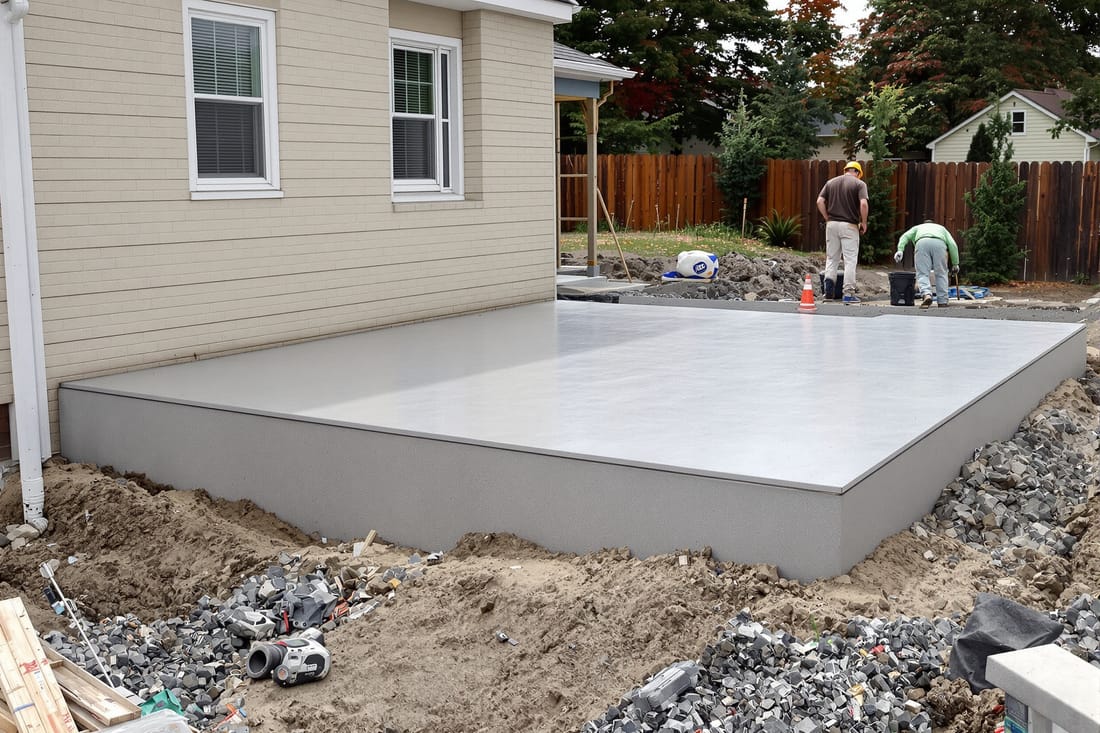
Concrete slab installation for homes and businesses in Spring Hill
Superior Concrete Spring Hill installs concrete slabs that match how people actually use their property in Hernando County. Whether you need a patio behind a home in Sterling Hill, a shed pad in Weeki Wachee Acres, or a foundation slab for a small shop off Commercial Way, we design each slab around your soil conditions, water flow, and expected load.
In Spring Hill, many lots have sandy soils that drain quickly, mixed with pockets of clay that hold water after heavy summer storms. Our crews evaluate the ground before any concrete slab work starts. We check for soft spots, buried debris, and elevation changes so we can plan proper grading and a compacted base. This local approach reduces cracking, standing water, and settlement problems that are common when slabs are installed without attention to the actual site.
We also help you choose the right slab thickness and reinforcement based on what will sit on it. A simple pedestrian patio may be 4 inches thick, but a slab for a boat, RV, or heavy workshop tools often needs extra thickness and steel. Before we schedule the pour, we walk the area with you, talk through your plans, and explain what level of slab design makes sense for your budget and long term use.
Step by step: how we install a concrete slab that lasts
Every concrete slab project we do in Spring Hill follows a clear, predictable process so you know what is happening on your property.
1. Site visit and layout: We start with measurements, checking property lines, utility locations, and drainage. We mark the slab outline with paint and string so you can visually confirm the size and placement.
2. Excavation and grading: We remove grass, roots, and soft topsoil, typically 4 to 8 inches depending on the slab design. In low areas that tend to puddle after storms, we grade a slight slope away from any structures so water does not sit against your home or pool deck.
3. Base preparation: We install a compacted base layer, usually crushed concrete or limestone in our area, to create a firm, level support. Using plate compactors, we compact in layers to reduce future settling, which is especially important in the sandy parts of Spring Hill.
4. Forms and reinforcement: We build wood or metal forms to define the slab edges and set the height. Then we add reinforcement that matches the use of the slab, such as rebar grid on chairs, welded wire mesh, or fiber reinforced concrete. We also plan control joints to manage where minor shrinkage cracks will form.
5. Concrete pour and finishing: We schedule pours around local weather and afternoon thunderstorms. The truck delivers the mix, we place it quickly, spread and screed it to level, then finish it with the texture you choose, from broom finish for traction to smooth trowel for interiors.
6. Curing and cleanup: We apply curing methods, such as curing compound or light moisture retention, to slow down drying and improve strength. Forms are removed, edges are cleaned, and we walk the slab with you to discuss care and when it can be used.
Concrete mix, thickness, and reinforcement options
Not every concrete slab in Spring Hill needs the same design. Superior Concrete Spring Hill explains the options in plain terms so you know what you are buying.
Concrete strength: For most residential applications like patios, walkways, and shed slabs, we typically use a 3000 to 3500 psi mix. For heavier loads such as RV pads, small commercial equipment, or areas with vehicle traffic, we recommend higher strength mixes, often 4000 psi, to handle the extra stress.
Slab thickness: A standard patio or sidewalk slab is usually 4 inches thick in our region. For driveways, RV pads, and workshop slabs that support vehicles or lifts, 5 to 6 inches is common. If you plan to anchor a steel building or run heavy machinery, we may recommend thicker edges or footers built into the slab.
Reinforcement options: We often use steel rebar for slabs that will see vehicle traffic or heavy loads, placed on chairs so it ends up in the middle of the slab where it is effective. For lighter use, welded wire mesh or fiber reinforced concrete helps control cracking. We also place control joints at planned locations, usually spaced based on slab thickness, to guide shrinkage cracks so they form where they are less noticeable and less harmful.
Surface choices: Broom finishes are popular for outdoor slabs in Spring Hill because they provide traction when wet from rain or pool water. For covered porches or interior slabs, smoother trowel finishes or slab preparation for future tile, vinyl, or epoxy coatings can be planned from the beginning.
What affects the cost of a concrete slab in Spring Hill
Homeowners often ask why concrete slab estimates differ so much between projects. The cost in Spring Hill is driven by several specific factors that we review with you before we put anything in writing.
Access to the pour area: Backyards with tight side yards, fences, or pools may not allow a concrete truck to get close. If we need to use wheelbarrows or a concrete buggy, or pump the concrete from the street, labor and equipment costs increase.
Site conditions: Soft, low, or uneven ground along Deltona Boulevard or in older neighborhoods may require extra excavation, fill, or base material. Removing old slabs, tree roots, or stumps adds time and disposal costs. If we discover underground issues, we explain them and offer options before proceeding.
Slab size and thickness: Larger slabs use more concrete, base material, and reinforcement. Increasing thickness from 4 inches to 6 inches significantly increases the volume of material. If your project calls for rebar on a tight spacing pattern or higher strength concrete, that also raises the material cost.
Finishing and extras: Simple broom finishes are more economical than decorative finishes. Adding thickened edges, footers for a metal building, vapor barriers, or drain channels raises the price but may be necessary for certain uses. We always separate these line items so you can see where your money is going and choose what matters most for your project.
Common slab problems in our area and how we prevent them
Spring Hill’s weather and soil create a distinct set of challenges for concrete slabs. Superior Concrete Spring Hill designs each slab to handle this local reality, not just generic building codes.
Settlement and voids: Sandy soils can wash out or shift, especially in areas with poor drainage or near older septic systems. We reduce this risk by using a compacted aggregate base, avoiding organic material under the slab, and paying attention to how roof and yard drainage flow around the new slab.
Cracking: All concrete will develop some cracks as it cures, but uncontrolled cracks can be minimized. We place control joints at proper spacing and depth, use adequate reinforcement, and manage curing to avoid rapid moisture loss in hot weather. We also discuss what level of visible cracking is normal and what would be considered a problem that needs repair.
Water pooling: In heavy summer rains, poorly sloped slabs can send water back toward your house or pool cage. We plan slopes from the start, usually a gentle fall away from structures, and adjust to your specific yard so that water drains to a safe area instead of creating puddles or erosion.
Surface wear: Outdoor slabs exposed to sun and near saltwater environments, such as properties closer to Weeki Wachee, benefit from proper finish and curing so the surface does not dust or flake prematurely. We avoid adding surface water during finishing and use mixes and finishes that stand up to Florida’s heat and moisture.
Planning your concrete slab project the right way
Before you schedule concrete slab installation, a little planning will help your project go smoother and avoid future changes that cost more later.
Think about future use: If you might later add a carport, hot tub, or shed on your slab, tell us up front. We can adjust the slab size, thickness, and reinforcement, and even plan for anchor bolts or embedded sleeves so you do not have to cut or patch the slab later.
Check boundaries and rules: Many Spring Hill properties are in communities with HOA rules about setbacks, visible structures, and drainage. We recommend confirming any restrictions and reviewing your survey so the slab does not end up too close to a property line or easement.
Plan utilities early: If you expect to run electrical conduit, water lines, or drain pipes beneath or through the slab, these must be in place before the pour. We coordinate with you or your electrician or plumber to set sleeves and conduits so the slab stays clean and watertight.
Schedule around weather and use: During rainy season, we plan pours early in the day and watch forecasts closely. We also talk with you about when you need the slab in service. Pedestrian traffic is usually allowed after about 24 to 48 hours, but heavy vehicles or equipment need more curing time, often a week or more depending on the design.
Why work with Superior Concrete Spring Hill for your slab
Our team lives and works in this community, so every concrete slab we install in Spring Hill reflects our reputation with neighbors, not just a job number. We focus on clear communication, straightforward pricing, and work that holds up through Florida summers.
From the first visit, we explain what we see in your yard and how that affects slab design. We talk through options instead of pushing a one size fits all solution, and we put our recommendations in writing so you know exactly what is included. During the project, you see the same local crew and a supervisor who can answer questions and make adjustments when needed.
We also stand behind our work. If something does not look right after the pour or during curing, we want to see it and address it, not avoid it. That is how we have built word of mouth business from homeowners who call us back when they are ready for the next patio, driveway extension, or workshop slab.
If you are considering a concrete slab anywhere in Spring Hill or nearby areas, you can contact Superior Concrete Spring Hill to schedule a site visit. We will walk the space with you, discuss your plans, and provide a detailed proposal tailored to your property and how you plan to use the slab.