Home › Sitework and Structural Concrete
Keep your project moving with reliable sitework and structural concrete in Spring Hill, FL. We construct concrete footings and walls, equipment pads concrete, retaining walls commercial, and piers and pedestals for all types of facilities. Our crews follow engineered designs and safety protocols on active job sites. Share your structural concrete drawings for scheduling and pricing.
Superior Concrete Spring Hill provides professional structural concrete throughout Spring Hill, FL, Florida and the surrounding area. Our licensed, insured crew delivers safe, clean, on-time work with a free estimate before anything begins. Call (352) 715-2150 or request your free quote.
Sitework and Structural Concrete Done Right in Spring Hill
Structural concrete is what actually holds your building, pool, or addition together, and the sitework under it is what keeps it from settling or cracking later. At Superior Concrete Spring Hill, we handle both parts as one coordinated process so you are not stuck dealing with separate dirt work and concrete crews that point fingers when there is a problem.
In Spring Hill and the surrounding Hernando County area, our work is shaped by local conditions: loose sand, pockets of clay, and a high water table in some neighborhoods. We plan your sitework and structural concrete with those realities in mind, from compaction testing to footing depth, so your slab, foundation, or structural elements perform for decades instead of a few seasons.
Whether you are building a new home, a detached garage, a commercial shell, or a heavy‑duty RV pad, we start by understanding how the load will be carried into the soil. Then we design or build to the engineer’s specs using materials and methods that hold up to Florida sun, daily rain cycles, and occasional tropical storms.
What Sitework Includes Before Any Concrete Is Poured
Quality structural concrete starts with disciplined sitework. On most projects in Spring Hill, our process begins with a detailed walk‑through to locate utilities, drainage paths, trees, and access points for equipment. We verify any elevations provided by your surveyor and establish benchmarks that tell us how much cut or fill is required.
Clearing and grubbing comes next. We remove vegetation, old roots, organic topsoil, and unsuitable fill. Leaving roots or soft material under a slab is one of the fastest ways to get settlement cracks. We dispose of debris offsite or use it in approved non‑structural areas if requested.
Once the area is stripped, we perform rough grading. Using a skid steer, laser level, and in some cases a mini excavator, we shape the pad and surrounding slopes so water drains away from the structure. In Spring Hill’s heavy rains, this step is critical to prevent water from ponding at slab edges and undermining the base.
After rough grade, we place and compact select fill if needed. Common options here are DOT approved road base or well graded limerock. We compact in thin lifts with a plate tamper or roller and may recommend a density test for larger commercial or multi‑family projects. Only when the base meets compaction targets do we move on to forming and rebar.
Structural Concrete Foundations, Slabs, and Beams
Structural concrete work at Superior Concrete Spring Hill covers foundations, grade beams, structural slabs, and tie beams for both residential and light commercial projects. We typically work from engineer stamped plans, but we can connect you with a local engineer if you are at an earlier stage.
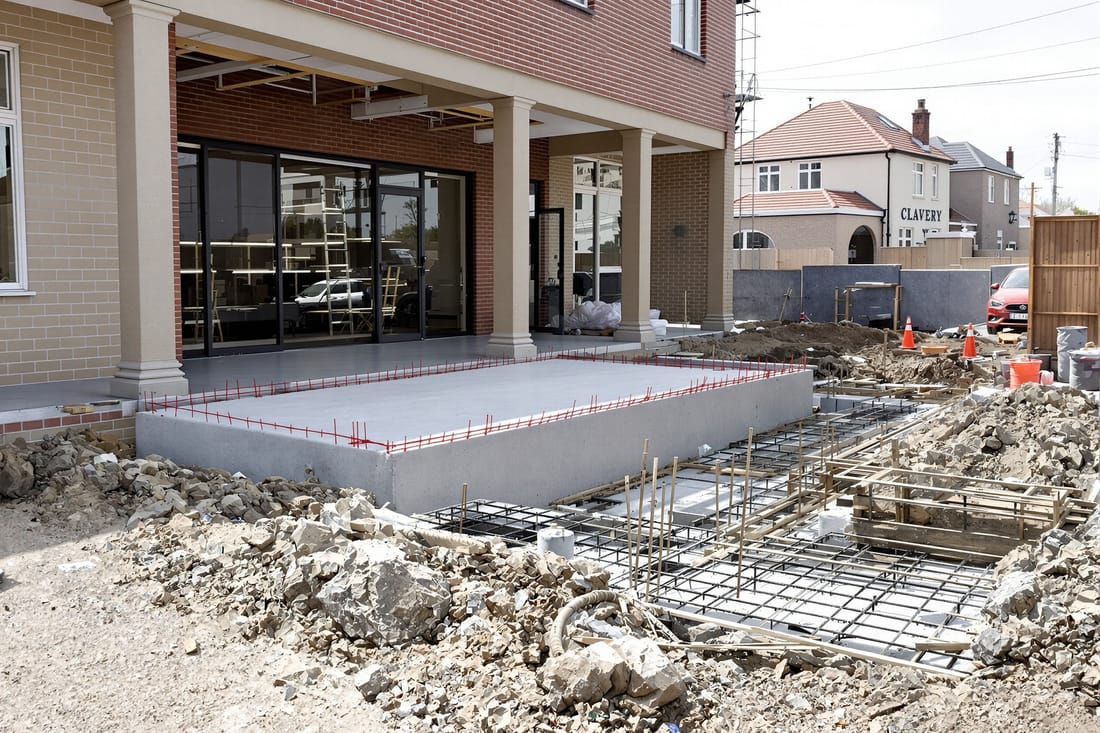
We start with formwork built from straight lumber or metal forms, set to elevation using laser levels and checked against your plans. For house slabs and additions, we set perimeter forms for thickened edge beams, interior grade beams if specified, and blockouts for plumbing and access points.
Reinforcement follows. In Spring Hill most structural slabs use a combination of #4 or #5 rebar in beams and a grid of rebar or welded wire mesh in the slab field. We tie steel on rebar chairs so it stays in the correct position during the pour, instead of getting pushed into the dirt. If the design calls for dowels into existing concrete or masonry, we drill and epoxy them to ensure proper load transfer.
Concrete mix design is selected for the specific use. Typical structural work uses 3000 to 4000 psi concrete with proper air content and slump for workability. For garage slabs or drive lanes that will see heavy trucks or equipment, we may recommend higher strength mixes and fiber reinforcement to reduce surface cracking. Before placing concrete, we coordinate inspections with Hernando County or the appropriate authority so all reinforcement, forms, and anchor locations are approved.
Pouring, Finishing, and Curing for Long‑Term Performance
How concrete is placed and cured is as important as how it is designed. On pour day we schedule the ready‑mix trucks to match the crew size and site access, which is a common problem on Spring Hill’s tight residential lots. We use chutes, buggies, or line pumps as needed to reach the forms without driving over prepared subgrade.
Concrete is placed in layers and vibrated or rodded around rebar, particularly in beams and footings, to remove trapped air. For slabs, we strike off to grade using screeds and then bull float to bring up paste for a smooth finish. Control joints are cut at the correct spacing and depth to manage inevitable shrinkage cracks. For larger slabs or commercial work we may use a power trowel to achieve a harder, flatter surface.
Curing is especially important in Florida’s heat. Rapid moisture loss can weaken the surface and cause early cracking. We apply curing compounds or keep the surface damp for the first several days, depending on the finish and specifications. On structural elements that will receive block or framing, we advise realistic timelines for loading so you are not putting weight on green concrete too soon.
We also pay attention to hardware. Anchor bolts, hold‑downs, and embedded plates are set to plan and checked for alignment and height during the pour, not after the concrete starts to set. This avoids the common problem of having to drill and epoxy hardware later, which adds cost and time.
Local Factors That Affect Cost and Design
Project cost for sitework and structural concrete in Spring Hill is driven by more than just square footage. The condition of your existing soil, access for equipment, engineering requirements, and inspection rules all factor in.
Soft or organic soils, common in low lying or previously wooded lots, may require undercutting and replacement with compacted fill. This adds to excavation and material costs but prevents serious settlement later. The elevation of your building pad relative to the street or neighboring lots can also require additional fill or retaining approaches to meet flood and drainage requirements.
Access is another major cost driver. If we cannot get trucks or large equipment close to the work area, we may need concrete pumps or extra labor to move material, and smaller compactors. We look at fence lines, overhead trees, septic tanks, and existing structures during the estimate so there are fewer surprises during construction.
Engineering and code requirements matter as well. Wind uplift design for coastal Florida, uplift connectors, and minimum footing sizes are dictated by the Florida Building Code and local amendments. For commercial or multifamily projects in Spring Hill, you may also need special inspections for reinforcing steel or concrete placement. During our estimate, Superior Concrete Spring Hill walks you through what is actually required for your specific permit so you can budget accurately.
What to Know Before You Hire a Structural Concrete Contractor
Before you sign a contract, there are a few key items that protect you and the long‑term performance of your project. First, confirm that the contractor you choose works regularly with structural concrete, not just basic flatwork. Ask to see recent projects that involved foundations, grade beams, or structural slabs in Spring Hill or nearby cities.
Next, ask how they handle soil conditions and compaction. A responsible contractor should be able to explain their process for evaluating the subgrade, when they recommend imported fill, and whether they can arrange density testing on larger jobs. If you only hear about square foot pricing with no mention of base preparation, that is a red flag.
Review the written scope of work. It should clearly state what sitework is included, what type and strength of concrete will be used, what reinforcement is planned, and who is responsible for permits and inspections. At Superior Concrete Spring Hill, our proposals list these details so you know exactly what you are paying for.
Finally, request a realistic schedule that considers permitting, inspections, weather delays, and curing time. Structural concrete cannot be rushed without sacrificing quality. We build reasonable timelines, keep you updated on inspection dates, and coordinate with your other trades so framers, block masons, or steel erectors are not standing around waiting on concrete that is not ready.